国产精品无码免费专区午夜_精品无码国产一区二区三区51安_AV无码久久久久不卡蜜桃_在线观看片免费人成视频无码

Quarterly Updates
October - December 2004

Contents

ISCloc In Operation
Visitors from China
Meetings
Modernizing the ISC Location Procedures
Can you design a new ISC logo?
New Data for the ISC Bulletin

ISCloc In Operation

The last quarter of 2004 has been characterized at the ISC as the critical time for the final integration and testing of ISCloc. We are pleased to report that this has been accomplished. The situation became critical when, in October 2004, we first started using ISCloc in its full capacity. The first attempted application with data from a whole month was beset with problems mainly associated with the old versions of the event grouping and phase reading associations (rather than with the editing and location procedures). These difficulties, although expected, were accompanied by the departure of the ISCloc developer, Dr. Richard Luckett. Thanks to the ingenuity and great skills of James Harris, our system administrator, we can proudly state today that, as of the end of December 2004, ISCloc and its associated programs are fully operational and usable on a routine basis by the ISC analysts.

There are still modifications to be made and more software to be written to improve the performance of the programs, however, this development work will not interrupt the ISC bulletin editing by Dr. Dmitry Storchak and Maiclaire Bolton. It was a great effort that took Dr. Luckett, Dr. Willemann, Mr. Harris and Dr. Storchak more than 3 years to complete. I would like to take this opportunity to congratulate and thank them on their important achievement with special thanks to Dr. Richard Luckett for turning ISCloc from a vision to a reality.

In October Richard left the ISC to join the British Geological Survey (BGS) team on the island of Montserrat in the Caribbean Sea. His contribution to the ISC development plan was extremely important, being the basis for the Centre's substantial move forward into the 21st century. His abilities encompassed a first-rate knowledge of seismology and skills in computer programming. This enabled him to help the ISC fully embrace its modern data management system by the creation of a complete suite of rapidly implemented parsers.

The new ISCloc program was developed as a replacement for the ISC's venerable location program. This challenging work culminated in the creation of a rigorously evaluated, indispensable platform for computing locations with new sets of travel times. We wish him the very best for the future.

Visitors from China

At the beginning of December 2004 we were honoured by the visit of a delegation of 10 scientists from the China Earthquake Administration, headed by Mr Li Youbo, Deputy Director General of CEA. After a presentation describing the work of the ISC the opportunity was taken to discuss possible new co-operative ventures between CEA and the ISC. In addition, a visit to the UK Ministry of Defence AWE Blacknest was arranged and a short visit to Guralp Systems Ltd, makers of seismic instruments.


CEA visitors to ISC

Meetings

General Assembly of the ASC (Oct. 2004 in Yerevan, Armenia) where Avi Shapira presented a number of ISC contributions.

Together with European colleagues from Russia, France, Germany, Italy, Switzerland and Macedonia, the ISC participated in an effort to prepare a proposal to the European Commission (EC) on topics associated with earthquake loss assessments. The Joint Research Centre at Ispra, Italy invited Avi Shapira to take part in a workshop on Earthquake Impact and Alert Systems where the possible proposed project was discussed.

Matthew Evans, a Ph.D. student of Leeds University, UK, who is completing his thesis at the ISC, participated in the AGU Fall meeting in December 2004. Matt presented results from the collaborative shear-wave splitting project with the University of Leeds. The poster, entitled “Global Analysis of Upper Mantle Anisotropy Using Automated SKS Splitting Measurements” can currently be downloaded in pdf format from the ISC web site. The splitting measurements on which this study was based can be accessed at www.gxjydl.com/SKS

In addition to participation in international conferences and meetings, where staff were able to meet with members, data users and providers and potential new members of the ISC, we also made important visits to the CTBT Organization in Vienna (A. Shapira) and to the Royal Society (C. Browitt and A. Shapira) in London were possibilities for further co-operation were reviewed and discussed.

Modernizing the ISC Location Procedures

The International Seismological Centre (ISC) has developed and put into operation a new Data Management System. As a result, it is now possible to review and subsequently introduce more up-to-date methods of locating seismic events into the ISC operations. At its last meeting in Sapporo, the ISC Governing Council decided to call for a workshop dedicated to location procedures to be held during the 2005 IASPEI General Assembly in Chile. All suggested improvements to location algorithms should be oriented for daily operation at the ISC, which has to locate globally distributed seismic events based on reported arrival times and other strictly parametric data at both local and teleseismic distances.

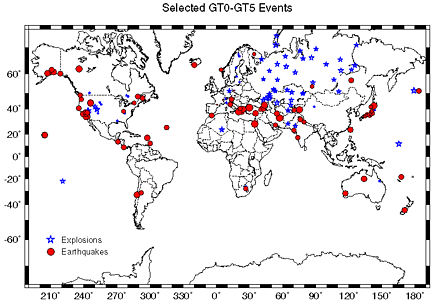
To have a common ground for comparison of different location algorithms and their implication on the location accuracy, a list of 157 well-located test events (GT0/GT5) was kindly selected by E. R. Engdahl from the IASPEI collection of Ground-Truth (GT) events (Bondar et al., 2004).

A relevant selection from the ISC bulletin is now available from the ISC and NORSAR web-sites in two formats, familiar to ISC CD and Internet site users: Fixed Field Bulletin (FFB) and International Seismic Format (ISF). It contains the originally published ISC hypocentres (coded ISC1), all reported hypocentres and the reference GT hypocentres (coded as IWREF) followed by the seismic station arrival data. This selection covers a period of over 40 years and consists of geographically well-distributed events.

Later we are planning to compute an up-to-date ISC solution for each test event, based on the technique used by the ISC at present and include it in the list with the agency code ISC.

The main goal of the workshop is to discuss possibilities of improving the location capabilities of the ISC by implementing new features in the ISC software. One important constraint is that a spherical standard Earth model is used.

New location features could be e.g.:
* ray parameter dependent correction for topography at reflection points in order to get smaller residuals for reflections at the Earth's surface (e.g., pP, sP, pwP, swP, PP, SS, etc); with these corrections the above phases may be used more regularly;
* non-static, ray-parameter dependent calculations of station-elevation corrections;
* systematic usage of core or Moho reflections to get better depth constraints;
* using back azimuth and slowness observations from arrays for location according to certain rules to be defined;
* using other phases of P and S type;
* using statistical phase identification as oppose to best residual fit identification.


This list of ideas is, of course, only an example and remains open for further suggestions from the workshop participants.

The organizers of the workshop hope that those testing different location programs will be able to spend some time switching the proposed location features on and off. In this case, during the workshop in Chile, it can be discussed, which additional features are most effective and should be made part of the ISC standard location procedure to achieve higher location accuracy.

Those wishing to participate should contact the workshop conveners, Johannes Schweitzer at Johannes.schweitzer@norsar.no and Dmitry Storchak at dmitry@isc.ac.uk.

Can you design a new ISC logo?

The ISC is seeking suggestions for its logo, primarily to be presented on posters and publications. Please let us have your ideas (including jpg file with the graphics). Send suggestions to admin@isc.ac.uk. We are sure that the designer of the selected logo will be very proud to find his innovative ideas and design representing the ISC.

New Data for the ISC Bulletin

Starting with data year 2003, the ISC Bulletin will include data from 6 more agencies:
BYKL - Geophysical Survey of the Siberian Branch Russian Academy of Sciences (RAS),Baykal Regional Seismological Centre, Irkutsk
IEC - Institute of the Earth's Crust, Siberian Branch RAS
NNC - Kazakhstan National Data Center
TIF - Institute of Geophysics, Academy of Sciences of Georgia
FUNV - FUNVISIS: FUNdación Venezolana de Investigaciones SISmológicas
BKK - Thai Meteorological Department.

We have received short descriptions from 4 of these agencies, which we are pleased to present in our newsletter.

The new agency code name BYKL is assigned to the Geophysical Survey, Siberian Branch RAS, Baykal Regional Seismological Centre, which is situated in the city of Irkutsk. The network includes 31 short-period and broadband digital stations. The bulletin, provided to the ISC on a regular basis, covers the Baykal lake region. Data of neighbouring networks in Altai-Sayan, Yakutia and Mongolia are pulled to assist in more accurate location of seismic events based on procedures set by S.Golenetsky. The contacts in the region are Oleg Masal'skiy (bomse@crust.irk.ru) and Nadezhda Gileva (NAGileva@crust.irk.ru).
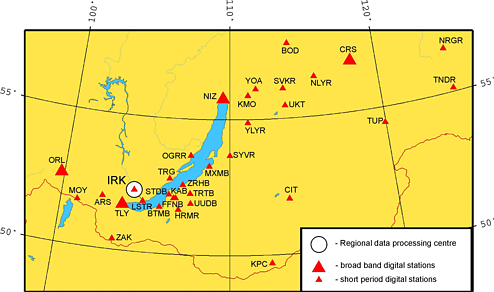

Seismic stations in the Baykal region

The agency code name IEC is assigned to Institute of the Earth's Crust, Siberian Branch RAS. The IEC is contributing parameters of fault plane solutions of crustal earthquakes in the region of Baykal lake, based on the distribution of onset polarity of Pn and Pg waves. The contact person there is Valentina Melnikova (vimel@crust.irk.ru).

The “Center for Acquisition and Processing of the Special Seismic Information” (agency code name NNC) serves as the Kazakhstan National Data Center (KNDC) for the CTBT. It was created in 1999 as a subdivision of the Institute of Geophysical Research of the National Nuclear Centre of Republic of Kazakhstan (IGR NNC RK), located in Almaty. The head of the Centre is Prof. Natalya Mikhailova.

The main goals of the Center are: acquisition, processing and storage of data from IGR NNC RK seismic stations network (see attached map), data exchange with other national and international data centres and research. The Center has a close co-operation with the Russian Geophysical Survey and with the Institute of Seismology of Kazakhstan.
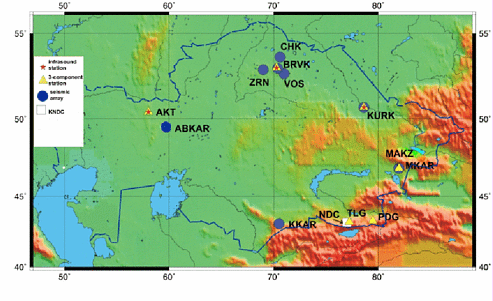

Seismic and infrasound stations, operated by IGR NNC RK

According to the Protocol of CTBT, five facilities located in Kazakhstan are included in the International Monitoring System of the CTBT. These are: Makanchi seismic array (PS23-a primary IMS seismic station), The seismic arrays Borovoye (AS057-an auxiliary seismic station), Kurchatov (AS058-auxiliary station) and the Aktyubinska, a 3-component seismic station (AS059–auxiliary station) and includes the Aktyubinsk infrasound station (IS31). The seismic arrays Karatay and Akbulak were constructed under an agreement with AFTAC (USA). Data continuously transmitted in real-time from these stations are received at the Center and then processed using software provided by NORSAR (Norway). Interactive analysis is made with the s/w program ‘Seatools', provided by US NDC.

KNDC routinely produces the automatic seismic bulletin, compiled within an hour. An interactive manual analysis is performed within one day. More information can be viewed on the web-site (www.kndc.kz).

The Institute of Geophysics (IG) of the Georgian Academy of Sciences operates the Georgian Seismic Network (agency code name TIF). Georgia is one of the most seismically active regions in the Alpine-Himalayan collision belt between the Arabian and Eurasian plates.

The instrumental era of seismology in Georgia began in 1899 when the Tiflis (now Tbilisi) seismic station was founded in the former Caucasian district of the Russian Empire. The first regional seismic network was completed by the end of the 1940s. From the beginning of 1960 the seismic network was equipped with highly sensitive seismographs of different types and was farther extended by the deployment of local seismic networks in the region of Enguri Dam (western part of Greater Caucasus) and Javakheti plateau (South Georgia). By the beginning of 1990s the seismic network in Georgia consisted of about 40 seismic stations. Due to the political and economical circumstances in the area, the number of seismic stations fell to about 10 in 1997. In 1998, with the help of Swiss Seismic Survey, the strong motion network of Georgia was established. The magnitude detection threshold was decreased from 4-4.5 in the early instrumental period, to 3.5 in 1940s, 2.5 since 1960 and less then 2.0 in 1980s. These networks provide the Institute with a seismological database of about 57,000 earthquakes from the Caucasus region, including data from Georgian and from the Azerbaijani and Armenian seismic networks.

Due to the political changes and the unstable economic situation that followed, the number of seismic stations was reduced from 40 in 1991 to 2. Until 2002 there were only two operating seismic stations in Georgia. In 2002, following the April 25, 2002 earthquake of magnitude 4.5 that shook Tbilisi, causing death, injuries, damages and great economical loss, the construction of the modern Georgian Seismic Network has started. At present, the Georgian Seismic Network (see map) consists of 7 digital stations, using dial up connection, leased telephone lines and microwave transmission for telemetry. Power supply at remote locations is provided by solar panels, high capacity batteries and/or uninterruptible power supplies. The stations are: The Mtatsminda Geophysical Observatory (TBL), Delisi Seismic observatory (TI2), Khelvachauri (KHL), Gareji (DGR), Akhalkalaki (AKH) station located in the seismically active Javakheti Valley at the southern part of Georgia, Gori (GOR) and Dusheti (DUS). Their locations are depicted on the map below.
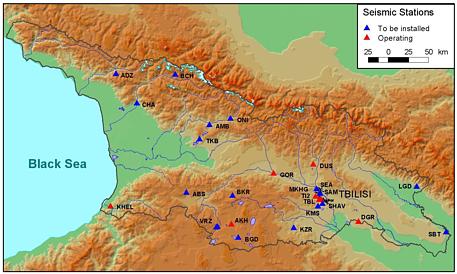

Seismic network of Georgia

国产精品无码免费专区午夜_精品无码国产一区二区三区51安_AV无码久久久久不卡蜜桃_在线观看片免费人成视频无码

      久久久久久久久久久免费视频| 日韩不卡的av| 国产一区二区在线观看免费视频| 99国产精品白浆在线观看免费| 日本老熟妇毛茸茸| av久久久久久| 国产乱码一区二区三区四区| heyzo亚洲| 色呦呦网站入口| 免费看黄色一级大片| 免费在线观看视频a| 国产无遮挡猛进猛出免费软件| 欧美一区二区三区爽大粗免费| 永久免费网站视频在线观看| 中文av一区二区三区| 国模吧无码一区二区三区| 大胆欧美熟妇xx| 无套内谢丰满少妇中文字幕| 欧美三级理论片| 精品国产免费av| 九九热只有这里有精品| 亚洲综合激情五月| xxx国产在线观看| 一本色道无码道dvd在线观看| 国产夫妻自拍一区| 喜爱夜蒲2在线| 久久久久久久高清| 一区二区三区视频在线观看免费| jizzjizz国产精品喷水| www.男人天堂网| 男人天堂成人网| 黄色aaaaaa| 黄色小视频免费网站| 99热手机在线| 北条麻妃av高潮尖叫在线观看| 九色在线视频观看| 国产91在线视频观看| 黄色免费福利视频| 水蜜桃色314在线观看| 欧美性潮喷xxxxx免费视频看| 妞干网这里只有精品| 天天操天天干天天玩| 色黄视频免费看| 成人性做爰片免费视频| 在线观看av的网址| 成年人深夜视频| 久久av综合网| 日韩av综合在线观看| 精品中文字幕av| 欧美成人精品欧美一级乱| 男女av免费观看| 成人久久久久久久久| 欧美xxxxx在线视频| 亚洲中文字幕久久精品无码喷水| 日韩中文字幕二区| 99久久国产宗和精品1上映| 中文字幕在线导航| 欧美一级特黄a| 日本高清一区二区视频| 警花观音坐莲激情销魂小说| 69精品丰满人妻无码视频a片| 欧美久久久久久久久久久久久久| 人妻av无码专区| 国产99久久九九精品无码| 成人性做爰aaa片免费看不忠| 免费看污污网站| 99精品视频国产| www.男人天堂网| 国产男女无遮挡| 在线免费av播放| 一级 黄 色 片一| 欧美少妇在线观看| 1024av视频| 亚洲一级片免费| 污视频在线观看免费网站| 成人在线免费观看视频网站| 国产一级爱c视频| 日日碰狠狠丁香久燥| 黄色片免费网址| 欧美又粗又长又爽做受| 国产视频一区二区三区在线播放| 97人人爽人人| 妞干网在线观看视频| 日本美女高潮视频| 日本xxxxx18| 国产麻花豆剧传媒精品mv在线| 国产一级片自拍| 人妻无码一区二区三区四区| 亚洲成熟丰满熟妇高潮xxxxx| 日韩欧美国产片| 国产午夜精品视频一区二区三区| 亚洲自偷自拍熟女另类| 少妇网站在线观看| 久久这里只有精品8| 69久久久久久| 欧美午夜性视频| 中文字幕 欧美日韩| 每日在线观看av| a在线观看免费视频| 久久男人资源站| 三上悠亚av一区二区三区| 久久综合久久网| 91看片破解版| 97在线免费公开视频| 91九色国产ts另类人妖| 日本熟妇人妻xxxxx| 17c丨国产丨精品视频| 亚洲欧美日韩三级| av免费播放网址| 亚洲区成人777777精品| 亚洲精品视频导航| 国产极品在线视频| www.欧美激情.com| 国产激情在线观看视频| www.国产在线视频| 日本中文字幕观看| 久久精品.com| 黄色三级中文字幕| av在线网站免费观看| 亚洲欧美另类动漫| 日韩av综合在线观看| 99视频精品全部免费看| 99热这里只有精品在线播放| 久久视频这里有精品| 精品一区二区三区毛片| 色国产在线视频| 久久久久狠狠高潮亚洲精品| av女优在线播放| 91大学生片黄在线观看| 午夜视频在线观| av污在线观看| 精品久久久久久中文字幕2017| 妞干网视频在线观看| 免费久久久久久| 久久久久xxxx| 亚洲最大综合网| 日韩视频免费在线播放| 两根大肉大捧一进一出好爽视频| 国产1区2区3区中文字幕| 特级毛片在线免费观看| 一级片视频免费观看| 国产日韩成人内射视频| 一本大道熟女人妻中文字幕在线 | 日韩精品―中文字幕| 国产人妻人伦精品| 欧美专区第二页| www.日本久久| 天天色天天综合网| 日本在线播放一区二区| 中文字幕第38页| 亚洲va在线va天堂va偷拍| 三级视频中文字幕| 亚洲欧美国产中文| gai在线观看免费高清| 欧美成人三级在线播放| 亚洲欧美视频二区| 国内国产精品天干天干| www.久久av.com| 日本一二三四区视频| 久久精品一二三四| 色哺乳xxxxhd奶水米仓惠香| 日本a级片免费观看| 欧美乱大交xxxxx潮喷l头像| 国内精品在线观看视频| 久久久亚洲精品无码| 国产欧美日韩网站| 欧美大片在线播放| 久久久久人妻精品一区三寸| 亚洲免费av一区二区三区| 爱情岛论坛vip永久入口| 成 人 黄 色 小说网站 s色| 欧美成人福利在线观看| 麻豆中文字幕在线观看| 国产资源第一页| 国产精品国产亚洲精品看不卡| 女性女同性aⅴ免费观女性恋| 欧美少妇性生活视频| 成人日韩在线视频| 免费看污污视频| 奇米影视亚洲色图| 国产一级不卡毛片| 五月天婷婷在线观看视频| 国风产精品一区二区| 欧美在线一区视频| 成人性做爰aaa片免费看不忠| 日本高清一区二区视频| 国产一级不卡视频| 精品视频一区二区在线| 日本中文字幕观看| 香港三级日本三级a视频| 国产最新免费视频| 国产一级片自拍| 屁屁影院ccyy国产第一页| 国产l精品国产亚洲区久久| 性生活免费在线观看| 日本一道在线观看| 99精品人妻少妇一区二区 | 日本网站免费在线观看| 日本a√在线观看| 9191国产视频|